
An Mn80 quotation is not complete until it states the alloy’s manganese, carbon, silicon, phosphorus, sulphur, size, moisture, and lot details. By checking the grade against your melt chemistry and comparing delivered cost, recovery, documentation, and testing terms, you can choose a supplier in Vadodara without paying for unusable manganese.
Key takeaways
- Confirm manganese, carbon, silicon, phosphorus, and sulphur limits before ordering.
- Select carbon grade according to your melt chemistry and steelmaking process.
- Calculate additions using target manganese, alloy assay, and actual recovery.
- Compare delivered cost by usable manganese, size, freight, and documentation.
What Mn80 Means—and Why the Carbon Grade Matters
Mn80 is not a complete purchasing grade. It normally indicates approximately 80% manganese, while the remaining material is mainly iron plus carbon, silicon, phosphorus, sulphur, and other residual elements. An offer for an mn80 ferro manganese alloy is usable only when it states guaranteed Mn limits and maximum values for each impurity.
Carbon determines whether the addition fits your melt chemistry. Standard high-carbon ferromanganese can push carbon above a tight steel or iron target; FeMn80 low-carbon provides manganese with a stated lower carbon ceiling. Do not assume that “low carbon” means the same chemistry from every supplier.
| Material | What the designation tells you | What you must confirm |
|---|---|---|
| Standard Mn80 | About 80% Mn, usually with higher carbon | Maximum C, Si, P, S, residuals, and guaranteed Mn range |
| FeMn80 low-carbon | About 80% Mn with reduced carbon | Exact maximum C and whether the added cost protects your melt limit |
Before accepting the quotation, complete these checks:
- Ask for the full chemical specification, including manganese, carbon, silicon, phosphorus, sulphur, iron balance, and any chromium or other residual-element limits.
- Match the carbon and phosphorus ceilings to your steel, grey-iron, or ductile-iron recipe. Excess phosphorus can damage properties in sensitive grades; excess carbon can make the addition unusable.
- Specify lump-size range, fines percentage, moisture, packaging, and lot-to-lot assay consistency. A cheaper tonne with fines, moisture, or rejected chemistry is not a cheaper accepted addition.
Choose the Grade for Your Melt, Not the Product Name
Standard Mn80 is usually suitable for grey iron, ductile iron, carbon steel, and low-alloy steel when its carbon and phosphorus limits fit the melt. The name alone does not prove that fit: a high-carbon Mn80 addition can push a tightly controlled steel heat over its carbon ceiling.
| Melt | Standard Mn80 | FeMn80 low-carbon | Better choice |
|---|---|---|---|
| Grey iron | Usually suitable; added carbon often fits the charge plan | Use when carbon must be held tightly | Standard Mn80 unless carbon is already high |
| Ductile iron | Suitable when carbon and phosphorus remain within the iron specification | Use for restricted carbon or cleaner chemistry control | Depends on the base iron analysis |
| Carbon steel | Suitable when the carbon pickup is allowed | Preferred for low-carbon grades and tight ladle analysis | FeMn80 low-carbon for carbon-sensitive heats |
| Low-alloy steel | Suitable only if carbon, phosphorus, and residual limits permit | Preferred for low-carbon or high-cleanliness grades | Confirm the steel grade before ordering |
For grey iron and ductile iron, standard Mn80 ferro manganese often supplies both manganese adjustment and useful carbon, but excess phosphorus can reduce ductility and impair casting performance. Check the base-metal analysis before treating that carbon as harmless.
For carbon and low-alloy steel, select FeMn80 low-carbon when the specification sets a narrow maximum carbon, when later alloy additions leave little carbon allowance, or when phosphorus must be tightly controlled. Compare the guaranteed carbon and phosphorus values, not only the manganese percentage.
A quotation for Mn80 ferro manganese alloy is incomplete unless it states the carbon classification and maximum carbon value. The cheapest tonne becomes expensive if it causes an off-chemistry heat or forces dilution.
Calculate the Addition from Recovery and Target Chemistry
Calculate the manganese increase before weighing the charge: target Mn minus the pre-addition bath Mn. Use this formula:
- Required alloy (kg) = Mn increase (%) × metal mass (kg) ÷ [alloy Mn fraction × expected recovery]
For example, raising 1,000 kg of metal from 0.45% to 0.85% Mn with Mn80 alloy and 75% recovery requires 0.004 × 1,000 ÷ (0.80 × 0.75) = 6.67 kg. Use the guaranteed lot assay, not the name “Mn80,” and record whether the calculation uses hot-metal or poured-metal weight.
Recovery changes with slag volume, oxidation, furnace type, alloy size, bath temperature, and addition point. Establish a separate recovery factor for each furnace or ladle route by comparing pre-addition and final spectrometer results; do not reuse a factor from another process.
Add ferro manganese for foundries only after the bath is fully molten and the initial chemistry sample is available. In furnace practice, remove excess oxidising slag, add the weighed alloy late enough to limit oxidation, and allow complete dissolution before the final sample.
During tapping, introduce it into the metal stream or a prepared ladle zone for dispersion, following your melt recipe’s temperature window. A cold bath leaves undissolved pieces; excessive temperature increases oxidation and recovery loss.
Recheck manganese after mixing and adjust only from the measured result. Keep an addition log covering alloy lot, charge weight, bath temperature, timing, calculated recovery, and final Mn.
Demand a Lot-Specific Certificate and a Defined Size Range
A usable purchase specification names the chemistry, particle size, sampling plan, packaging, and acceptance test for each lot—not merely “Mn80.” Require a lot-specific certificate of analysis, because a generic datasheet does not prove the composition of the shipment.
- Chemistry: guaranteed manganese range, carbon maximum, silicon maximum, phosphorus maximum, sulphur maximum, iron balance, and any limits for residual elements.
- Physical condition: minimum and maximum lump size, permitted undersize and oversize fractions, fines percentage, moisture limit, and visible contamination limit. Replace “lump” with a sieve range.
- Traceability: lot or batch number, production date, manufacturer, country of origin, stock location, and whether the material is single-lot or blended. For imported bulk ferro manganese india, request import documents where applicable.
- Sampling and testing: sample quantity, points of collection, mixing and splitting method, laboratory method or named standard, certificate format, and the assay laboratory’s identification.
- Packaging: net weight per bag or drum, pallet configuration, liner type, seal condition, marking, and tolerance for short weight.
| Document or control | What it must establish | What goes wrong without it |
|---|---|---|
| Certificate of analysis | Results for the specific lot, not a catalogue grade | Chemistry is accepted on trust |
| Retained sample | Sealed sample identified to the lot and shipment | A dispute cannot be reproduced |
| Re-test clause | Independent laboratory, method, cost, and acceptance rule | Rejected material remains commercially unresolved |
Require traceable weighing and an independent sample-retention clause in the order. Two products labelled Mn80 can carry different carbon, phosphorus, sulphur, silicon, and fines levels.
Compare Delivered Mn Cost When Buying in Vadodara
Compare quotes on delivered cost per contained tonne of manganese, not on the ex-warehouse alloy price. Divide the delivered invoice value, after agreed GST treatment, by the tonnes of manganese actually received: net alloy weight × guaranteed Mn fraction × contracted recovery.
| Cost point | Ask the supplier to state | Why it changes the comparison |
|---|---|---|
| Material | Mn assay, maximum carbon, silicon, phosphorus and sulphur | “Mn80” alone does not identify the carbon grade |
| Logistics | Freight to your gate, loading, unloading and any port-to-inland movement | A low alloy price can hide expensive transport |
| Quantity | Net weight, bag tolerance, fines and breakage allowance | You pay for usable alloy, not wet bags or unusable fragments |
| Quality control | Sampling method, laboratory method, certificate and retest cost | Rejected or disputed lots consume production time |
| Tax and packing | GST treatment, bagging, pallets, slings and weather protection | Packaging and tax-credit differences alter landed cost |
Treat “bulk ferro manganese india” as a supply description, not proof of domestic origin. Ask for the manufacturer, lot number, stock location, import documents where relevant, and confirmation that the chemistry is not blended from unrelated lots.
For repeat supply, select a ferromanganese alloy supplier that fixes size range, delivery lead time, weighing records, rejection limits and retesting procedure in the purchase order. A mn80 ferro manganese supplier in vadodara should also show how it controls moisture and protects bags during storage.
Swasti Exports can be compared on these same documents and delivered-cost terms rather than catalogue grade names.
Related products
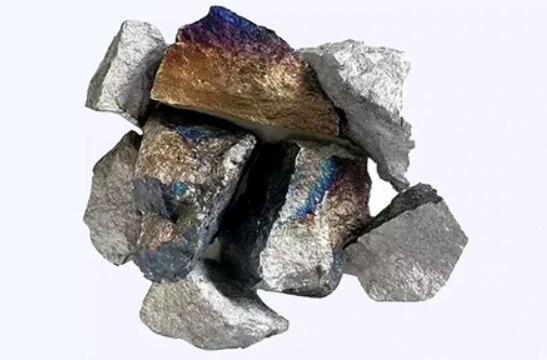 | Minerals Mn80 Ferro Manganese Alloy is a mineral or alloy listed under Minerals for foundry and industrial material sourcing across procurement, distribution,... View product → |
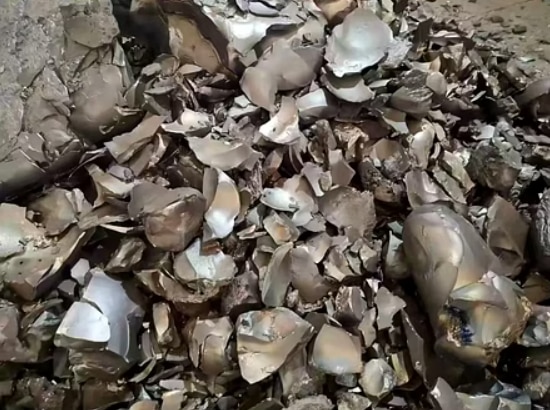 | Minerals FeMn80 LC Ferro Manganese Alloy lump FeMn80 LC Ferro Manganese Alloy lump is a mineral or alloy listed under Minerals for foundry and industrial material sourcing across procurement,... View product → |
Frequently asked questions
What does Mn80 mean in ferro manganese?
Mn80 normally indicates approximately 80% manganese, but you must confirm guaranteed manganese limits and maximum impurity values.
How do you choose the right ferro manganese grade for a foundry melt?
Choose the carbon grade and impurity limits that fit your target chemistry, furnace process, and product specification rather than relying on the Mn80 name alone.
How do you calculate the required Mn80 addition?
Base the addition on the manganese increase required, the alloy’s certified manganese assay, and the recovery achieved in your furnace.
What documents and specifications should you request from a supplier?
Request a lot-specific certificate showing manganese and impurity results, along with the defined lump or screened size range and shipment details.
How should you compare Mn80 ferro manganese prices in Vadodara?
Compare delivered cost by usable manganese after recovery, including alloy price, freight, handling, size consistency, and documentation.
Related product
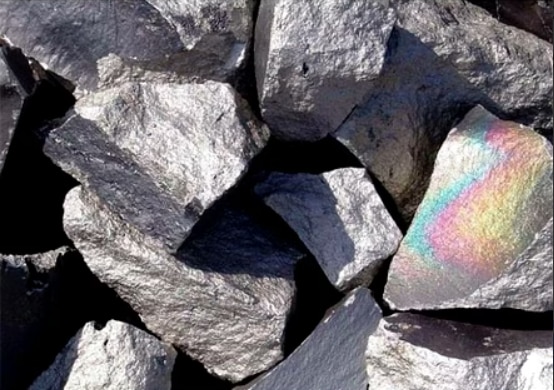 | Minerals FeMn75 65 High Carbon Ferro Manganese Alloy 60mm FeMn75 65 High Carbon Ferro Manganese Alloy 60mm is a mineral or alloy listed under Minerals for foundry and industrial material sourcing across... View product → |
Keywords