Food manufacturers need more than a yellow powder: they need a defined particle size, moisture limit, curcuminoid result, microbiological profile, residue status and traceable batch documents. By the end, you can compare Indian suppliers, choose between whole turmeric and powder, match the specification to your product, and accept a shipment with fewer quality surprises.
Key takeaways
- State the food application, destination market, standard, and acceptance tests.
- Match mesh size, curcumin level, moisture, and dosage to your production process.
- Request the supplier’s food licence, certificate of analysis, batch number, and traceability records.
- Reject material with unclear origin, broken seals, missing tests, or industrial-only documentation.
Set the Turmeric Powder Specification Before Requesting a Quote
Give the supplier a written specification, not “food-grade turmeric” or “industrial turmeric powder.” State the food application, destination market, applicable FSSAI or importing-country standard, and the batch tests required before acceptance.
- Specify mesh size or particle size, such as 60, 80 or 100 mesh, to match your mixer, sieve and finished-product texture.
- Set moisture at a maximum of 10% where the FSSAI turmeric-powder standard applies; excessive moisture increases caking and storage risk.
- Require curcuminoids of at least 2% and volatile oil of at least 2%, with the test method named. Ask whether curcuminoids were measured by HPLC or spectrophotometry.
- Separate total ash, maximum 9%, from acid-insoluble ash, maximum 1.5%. Total ash measures mineral residue; acid-insoluble ash is the stronger warning for dirt, sand or siliceous contamination.
- Add a numerical colour value, such as ASTA or another named instrument method. “High colour” is not a specification, and colour value is not interchangeable with curcuminoid percentage.
- Request batch-specific aerobic plate count, yeast and mould, Salmonella, pesticide-residue and heavy-metal results, including laboratory methods and sampling plan. Low moisture does not prove microbiological safety.
- Identify the raw material: turmeric fingers, polished turmeric or another grade, because the choice changes aroma, colour, curcuminoids and price.
Ask for a certificate of analysis tied to the offered lot, plus the batch number, grinding date, packaging format and traceability to raw turmeric. Retain an approval sample before placing a bulk order; a generic company certificate cannot prove that the quoted turmeric powder for food processing matches the shipment.
Choose the Raw Material and Form That Fit Your Production Line
Powder is the faster choice for a food-production line, while whole turmeric gives you more control over cleaning and grinding. The trade-off is that powder quality depends heavily on the supplier’s raw-material selection, milling controls and lot testing.
| Form | Quality control | Cost and processing effort |
|---|---|---|
| Powder | Check the retained sample, batch number, grinding date, particle size, moisture, ash, curcuminoids, volatile oil, colour and microbiology. Adulteration and foreign matter are harder to detect visually. | Usually lowers your labour, equipment and production time. You pay for the supplier’s cleaning, grinding, screening and packaging, and inconsistent powder can disrupt dosing or colour. |
| Whole turmeric | Inspect fingers for mould, insects, stones, unusual odour and excessive polishing; record the lot back to raw turmeric. Your facility controls cleaning and grinding, but contamination can enter during handling. | Requires sorting, washing or dry cleaning where appropriate, drying control, grinding, screening and dust management. It can reduce dependence on a supplier’s milling process but adds labour, yield loss and equipment cost. |
Choose powder when you need repeatable dosing for curry blends, sauces, snacks, beverages or bakery premixes and lack a validated milling line. Specify a moisture-barrier food-contact liner, sealed outer packaging and storage away from heat, sunlight and odours.
Choose whole turmeric when you have cleaning and grinding capacity, want to verify the raw spice yourself, or need separate milling for different products. For either form, request a current certificate of analysis tied to the offered lot, not a generic company document, from your bulk turmeric powder supplier.
Match Particle Size and Dosage to the Food Application
Use 60–80 mesh for dry blends and seasonings; choose finer powder when you need rapid dispersion, smooth texture or minimal visible particles. The inclusion figures below are practical trial ranges, not fixed recipes.
| Application | Particle size | Starting inclusion range |
|---|---|---|
| Curry blends | 60–80 mesh | 2–8% |
| Sauces and gravies | 80–100 mesh | 0.2–1% |
| Ready meals | 60–80 mesh | 0.3–1% |
| Snack seasoning | 60–80 mesh | 0.5–2% |
| Beverages | 100–200 mesh or dispersible grade | 0.05–0.3% |
| Bakery products | 80–100 mesh | 0.1–0.5% |
| Nutraceuticals | 80–100 mesh or micronised grade | 1–5% of the blend |
Start at the low end for beverages, bakery products and sauces because turmeric quickly affects flavour, colour and sedimentation. A coarse powder in a beverage leaves grit; a fine powder in a dry seasoning can create dust and uneven dosing. Test the selected mesh in your actual mixer, spray system or filling line.
Specify curcuminoid content, moisture, total ash and acid-insoluble ash alongside particle size. Industrial turmeric powder is not automatically suitable for food production, so buy turmeric powder for food processing with batch microbiology, residue testing and a declared raw-material grade.
For nutraceuticals, set inclusion from the required curcuminoid dose rather than powder weight alone, then confirm bioavailability and label limits for the destination market.
Separate Food-Grade Powder from Industrial and Non-Food Material
A food-grade claim proves little without a batch-specific certificate of analysis (COA).
Ask for the lot number, production date, raw-material description, and destination market on the COA; a turmeric powder exporter in India must also hold a Spices Board Certificate of Registration as Exporter (CRES), but CRES does not prove that one shipment meets importing-country limits.
Request these records before approving the powder:
- COA showing moisture at 10% maximum, total ash at 9% maximum, acid-insoluble ash at 1.5% maximum, curcuminoids at 2% minimum, and volatile oil at 2% minimum under the applicable FSSAI turmeric-powder standard.
- Laboratory results for mesh size, colour value such as ASTA, foreign matter, Salmonella, Escherichia coli, yeast, and mould against the limits in your product specification and destination market.
- Pesticide-residue results covering the importing country’s current maximum-residue limits and your prohibited-substance list; an Indian report cannot automatically prove overseas compliance.
- Heavy-metal results for lead, cadmium, mercury, and arsenic, plus a declaration identifying fingers, polished turmeric, or another raw-material grade.
- Packaging and traceability records identifying the food-contact inner liner, moisture barrier, seal, pallet protection, storage conditions, and batch linkage.
Industrial turmeric powder is not automatically suitable for food production. Reject material with missing lot identity, unexplained test methods, broken seals, or results issued for another batch. Ask for destination-required health or export documents separately, because laboratory evidence and shipping paperwork serve different purposes.
Qualify a Turmeric Powder Wholesale Supplier in Vadodara
Compare a turmeric powder wholesale supplier in Vadodara on evidence, not the lowest quote. Ask for the offered lot number, grinding date, raw-turmeric source, retained sample, packaging format and a current certificate of analysis. A company-wide “food grade” statement does not verify the batch you will receive.
| Check | Accept | Reject |
|---|---|---|
| Batch identity | Lot-linked COA, retained sample and traceability to raw turmeric | Generic COA with no lot number |
| Composition | Moisture ≤10%, total ash ≤9%, acid-insoluble ash ≤1.5%, curcuminoids ≥2%, volatile oil ≥2%, plus ASTA colour or equivalent | “High colour” with no test result |
| Microbiology | Batch results for aerobic plate count, yeast and mould, and Salmonella, with method and sampling plan | Moisture result presented as proof of safety |
| Commercial terms | Mesh range, net weight, packaging, testing, freight, Incoterm and destination documents stated | A price that excludes testing or delivery costs |
A capable bulk turmeric powder supplier will show how total ash differs from acid-insoluble ash: the latter helps expose dirt or siliceous contamination. Ask Swasti Exports for the same batch evidence, then compare it with competing quotations on an equal specification.
For domestic delivery, confirm the GST invoice, batch marking, sealed food-grade bags and transport conditions. For export, a turmeric powder exporter in India must hold the Spices Board Certificate of Registration as Exporter (CRES); also confirm the importing country’s residue, microbiological, labelling and certificate-of-origin requirements. CRES alone does not prove destination-market compliance.
Related product
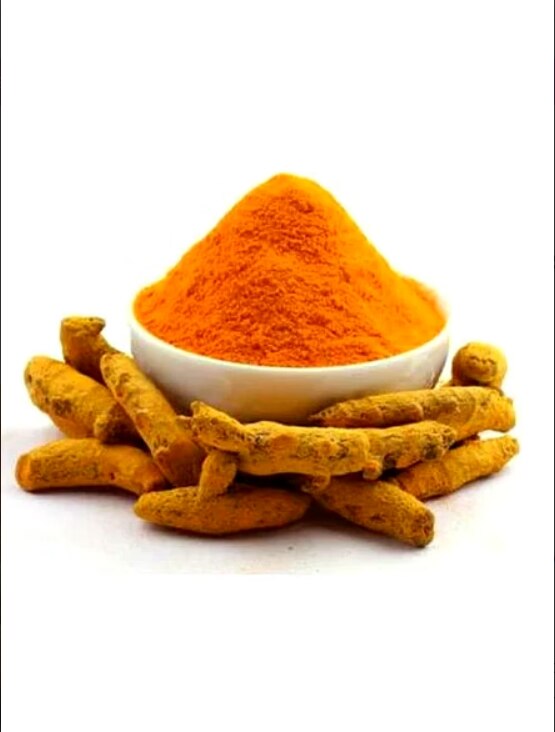 | Powder Products Turmeric Powder is a powdered ingredient listed under Agriculture > Powder for food ingredient and seasoning supply across procurement, distribution,... View product → |
Frequently asked questions
What should you include when requesting a turmeric powder quote?
State the food application, destination market, required FSSAI or importing-country standard, pack size, delivery terms, and batch tests required before acceptance.
How do you choose turmeric powder for a food production line?
Choose the raw material, form, mesh size, curcumin level, moisture limit, and dosage that match your recipe, equipment, and finished-product requirements.
How can you distinguish food-grade turmeric powder from industrial material?
Check the product designation, food licence, certificate of analysis, batch number, contaminant testing, packaging, traceability records, and intended-use documentation.
How do you qualify a turmeric powder wholesale supplier in Vadodara?
Ask for licence details, recent batch test results, specifications, origin records, sample approval, packing information, production capacity, and export documentation.
Keywords