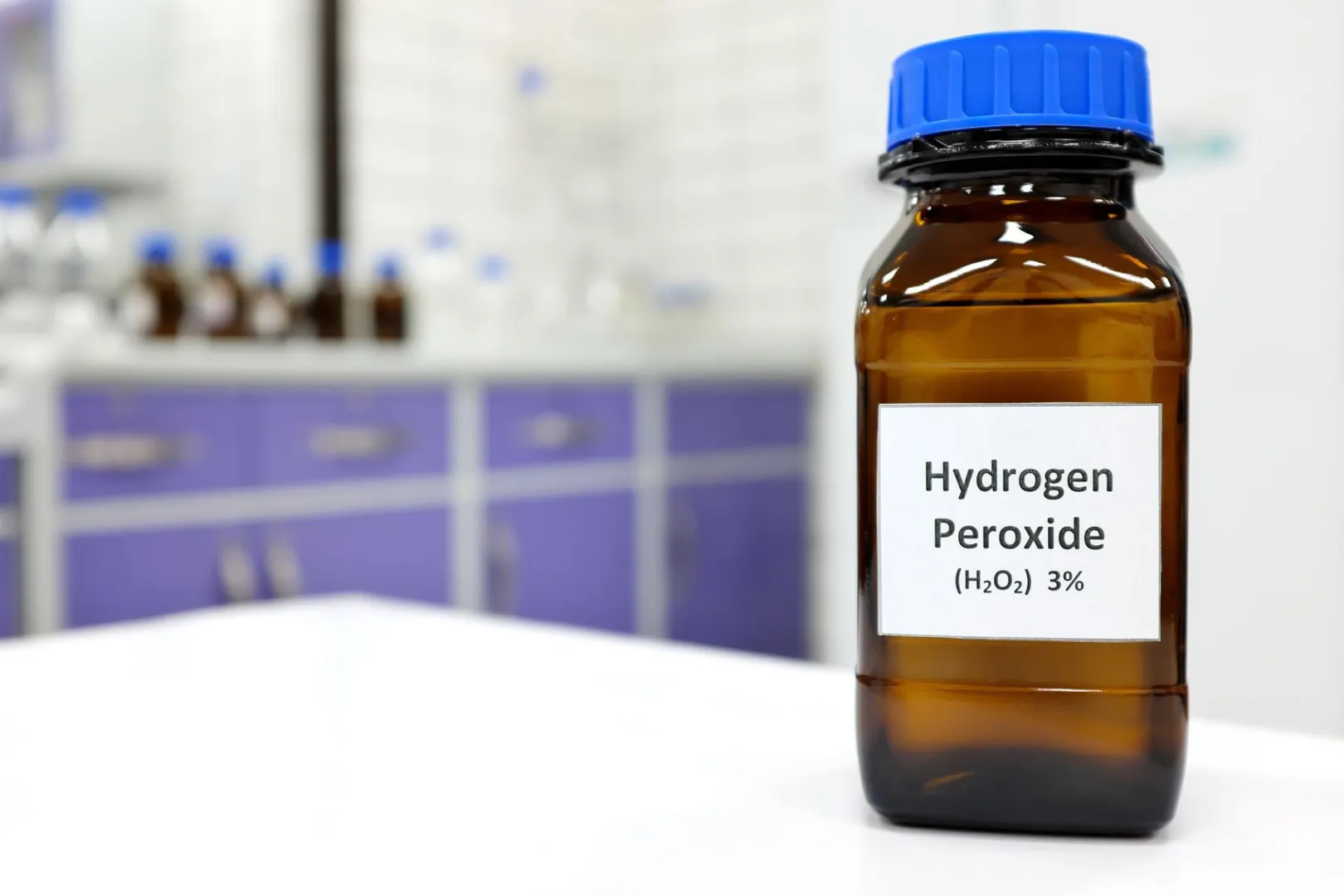
Hydrogen peroxide is an important industrial and laboratory chemical because it can provide oxidation without leaving many persistent inorganic residues—the primary decomposition products are water and oxygen.
Major applications include:
- Water and wastewater treatment
- Disinfection and sanitation
- Pulp and paper bleaching
- Textile bleaching
- Chemical manufacturing
- Pharmaceutical manufacturing
- Electronics and semiconductor processing
- Food and packaging applications, where appropriately specified grades are used
- Laboratory applications
- Environmental oxidation processes
3. Common Concentrations
Hydrogen peroxide is supplied at different concentrations depending on the application.
Examples include:
- 3% – common consumer/laboratory-type dilute solution
- 6–12% – various bleaching and specialty applications
- 30% – laboratory and industrial applications
- 35% – industrial, pharmaceutical and specialty applications
- 50% – industrial applications
- 60–70%+ – specialized industrial uses and highly concentrated grades
Important: Concentrated hydrogen peroxide is substantially more hazardous than dilute solutions and requires appropriate storage, handling and transport controls.
4. How Does Hydrogen Peroxide Work?
Hydrogen peroxide is primarily an oxidizing agent.
For example, it can oxidize many organic and inorganic substances. In suitable conditions it decomposes into:
H₂O₂ → H₂O + O₂
This oxygen release is one reason hydrogen peroxide can be useful in oxidation, bleaching and sanitation processes.
5. Industrial Manufacturing
Commercial hydrogen peroxide is primarily manufactured using the anthraquinone process.
In simplified terms:
Anthraquinone derivative → Hydrogenated intermediate → H₂O₂ formation → Separation and purification
The process allows hydrogen peroxide to be produced continuously on an industrial scale.
6. Grades of Hydrogen Peroxide
For commercial supply, the grade is very important.
Common categories include:
- Technical/Industrial Grade
- Food Grade
- Pharmaceutical Grade
- Reagent/Analytical Grade
- Electronic/Semiconductor Grade
- High-Purity Grade
The appropriate grade depends on the intended application and required impurity limits.
7. Storage & Safety
Hydrogen peroxide should be treated as a strong oxidizer, particularly at higher concentrations.
Important precautions include:
- Keep away from combustible and organic materials.
- Protect from excessive heat and direct sunlight.
- Avoid contamination with incompatible materials, including certain metals and reducing agents.
- Use compatible containers and equipment specified for the concentration.
- Do not store it in an improperly sealed system where oxygen buildup could create pressure.
- Use appropriate PPE and follow the product's SDS (Safety Data Sheet).
- Concentrated solutions can cause severe skin and eye damage.
8. Hydrogen Peroxide as a Commercial Product
If you are planning to supply Hydrogen Peroxide through Swasti Exports, your product listing should clearly specify:
Product: Hydrogen Peroxide
Chemical Formula: H₂O₂
CAS No.: 7722-84-1
Concentration: e.g., 30%, 35%, 50%
Grade: Industrial / Food / Pharmaceutical / Reagent / Electronic
Appearance: Clear, colorless liquid
Packaging: As applicable for the concentration and grade
COA: Certificate of Analysis available
SDS: Safety Data Sheet available
Keywords